


This Isn’t About Being Lazy
Rarely do people avoid the hard work simply because they’re lazy. That’s the story we tell about other people. The truth is most of us avoid it because we’re tired, because we’ve tried before and it didn’t stick, because the work feels enormous and the pain of staying put feels at least familiar. Familiar hurts less than uncertain. At least that’s what we tell ourselves.
But here’s the thing about avoidance. It isn’t free. It feels free. That’s the con. You sidestep the hard conversation, the honest group, the therapist’s office, the moment of real disclosure, and for a little while nothing blows up. The ground doesn’t shake. You get to keep the version of your life that looks okay from the outside. And you pay for it quietly; in ways you might not even be tracking.
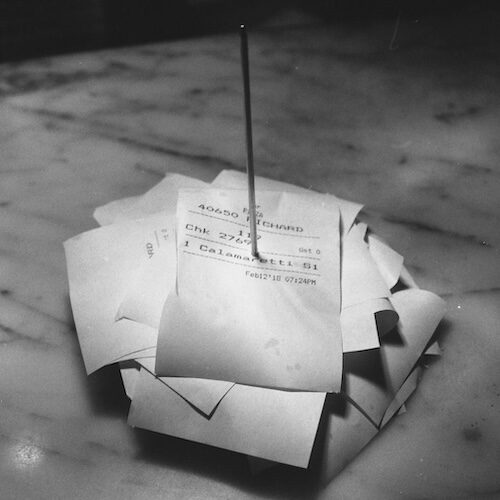
The Tab You Don’t See Coming
You pay in the slow erosion of intimacy with the people closest to you. Not a blowout, just a gradual cooling, a distance that grows so slowly nobody can point to the moment it started. You pay in the shame that follows you into rooms where you should feel safe. You pay in the mental energy it takes to maintain a version of yourself that isn’t quite true, the exhausting performance of being fine. You pay in the years. The years where something in you stays stuck while the rest of your life keeps moving, and eventually you look up and realize the gap between who you are and who you wanted to be has gotten wider than you planned.
None of that is meant to pile on. It’s meant to name what’s happening, because most of us are so close to our own avoidance that we can’t see the full price tag. We see the cost of the work, the discomfort of facing shame head-on, the awkwardness of real accountability, the slow grind of building new patterns when the old ones are so deeply grooved, and we compare that against nothing. Against the assumption that not changing is neutral. But not changing isn’t neutral. Not changing has a running tab, and it’s been adding up longer than you’ve noticed.
What the Work Actually Costs
I remember sitting in my therapist’s office several years ago, a few sessions in, and saying something out loud I had never said to another human being. I was braced for the room to shift, for something to change in his face, for the reaction I had spent years convincing myself would come if I ever actually said it. And nothing happened. He didn’t flinch. He didn’t look at me differently. He just stayed there, steady, and kept going. Something in my chest loosened in a way I hadn’t expected, like a knot I’d carried so long I’d stopped knowing it was there. That’s what the work costs. It costs you that moment, and everything waiting on the other side of it.
It isn’t fast and it isn’t clean. You’ll have to show up to things that don’t feel like they’re working yet, build patterns that feel foreign before they feel like yours, and rewire something that took years to wire in the first place. But it has a direction. That’s the difference nobody talks about enough. Avoidance doesn’t have a direction. Avoidance just has more of itself.
The question worth sitting with isn’t whether change is difficult. It is. The question is whether what you’re avoiding is more costly than what you’re already carrying. Because you’re already carrying something. You’re already paying a price. The only real choice is which one.
The Math Gets Obvious
Something happens when people finally get honest about what staying stuck has cost them. Not a shame spiral, not a collapse. Just a moment where the fog lifts enough to see the numbers clearly. The price of the work stops looking so high once you hold it next to the actual price of not doing it. And something shifts. Not everything at once. But something real.
You don’t have to be ready in some complete and total way. You just have to be willing to look at what avoidance is really costing you, not as a weapon to use against yourself, but as information. A reason to finally make a different investment. Because here’s what nobody tells you about doing the work: most people who get to the other side don’t say it was harder than staying stuck. They say they just wish they’d started sooner. That’s the part avoidance never shows you. It only ever shows you the cost of moving. Never the cost of standing still.